
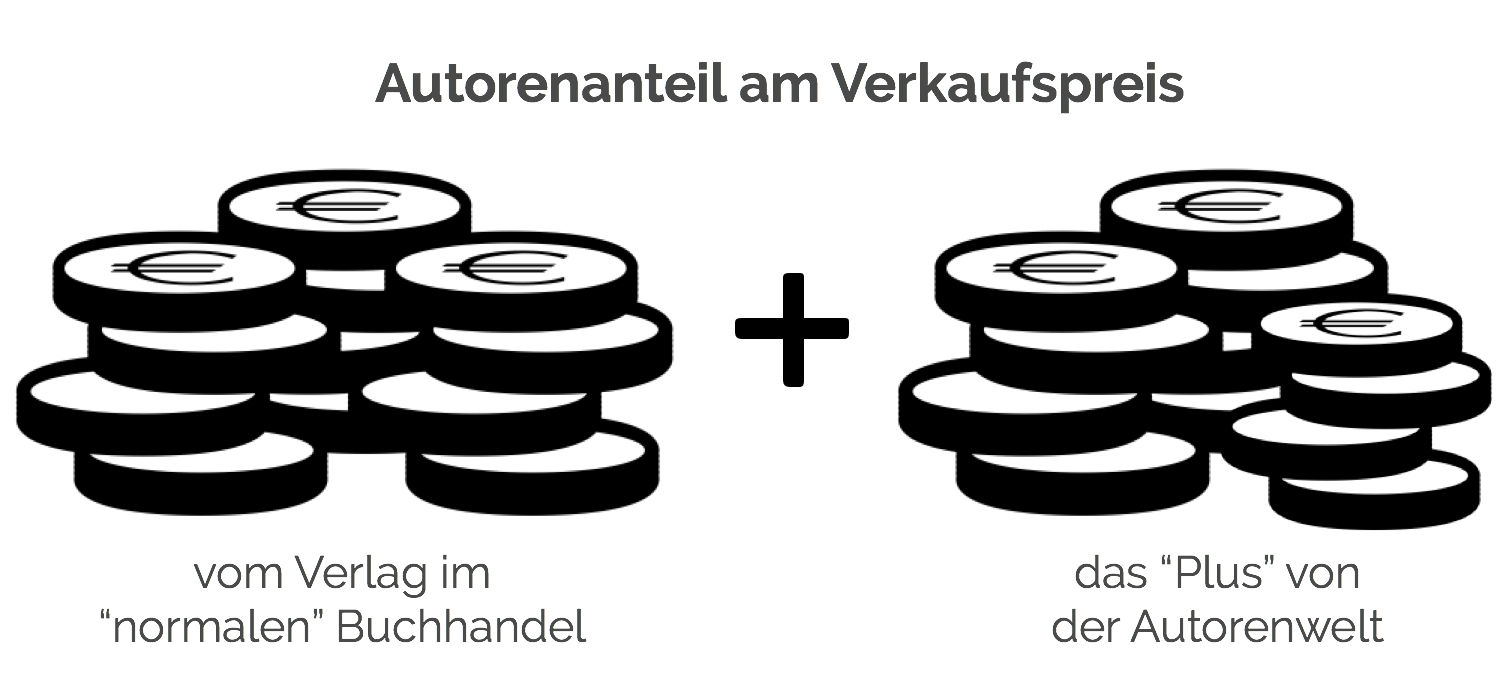
Autorenfreundlich Bücher kaufen?!
Beschreibung
Doctoral Thesis / Dissertation from the year 2012 in the subject Engineering - Mechanical Engineering, Universidad Politécnica de Valencia (Departamento de M¿aquinas y Motores T¿ermicos), language: English, abstract: The increasing use of turbochargers is leading to an outstanding research to
understand the internal flow in turbomachines. In this frame, computational
fluid dynamics (CFD) is one of the tools that can be applied to contribute
to the analysis of the fluid-dynamic processes occurring in a turbine. The
objective of this thesis is the development of a methodology for performing
simulations of radial turbomachinery optimizing the available computational
resources. This methodology is used for the characterization of a vaned-nozzle
turbine under steady and pulsating flow conditions.
An important effort has been devoted in adjusting the case configuration
to maximize the accuracy achievable with a certain computational cost. Concerning
the cell size, a local mesh independence analysis is proposed as a
procedure to optimize the distribution of cells in the domain, thus allowing to
use a finer mesh in the most suitable places. Particularly important in turbomachinery
simulations is the influence of the approach for simulating rotor
motion. In this thesis two models have been compared: multiple reference
frame and sliding mesh. The differences obtained using both methods were
found to be significant in off-design regions. Steady flow CFD results have
been validated against global measurements taken on a gas-stand.
The modeling of a turbine, installed either on a turbocharger test rig or
an engine, requires the calculation of the flow in the ducts composing the
system. Those ducts could be simulated assuming a one-dimensional (1D)
approximation, and thus reducing the computational cost. In this frame of
ideas, two CFD boundary conditions have been developed. The first one allows
performing coupled 1D-3D simulations, communicating the flow variables from
each domain through the boundary. The second boundary condition is based
in a new formulation for a stand-alone anechoic end, which intends to represent
the flow behavior of an infinite duct.
Finally, the turbine was simulated under engine-like pulsating conditions.
The pulsating effects are analyzed separately in the different components of
the turbine and are compared with the results obtained in equivalent steady
simulations, in order to evaluate their quasi-steadiness. The information from
the computations is used to describe the unsteady flow in the turbine components,
and thus, contribute to engine modeling by the implementation of a
new turbine model for its use in 1D codes.
Details
| Verlag | GRIN Verlag |
| Ersterscheinung | 11. Oktober 2013 |
| Maße | 21 cm x 14.8 cm x 1.8 cm |
| Gewicht | 365 Gramm |
| Format | Softcover |
| ISBN-13 | 9783656507239 |
| Auflage | 1. Auflage |
| Seiten | 248 |
Schlagwörter
Bekannt durch