
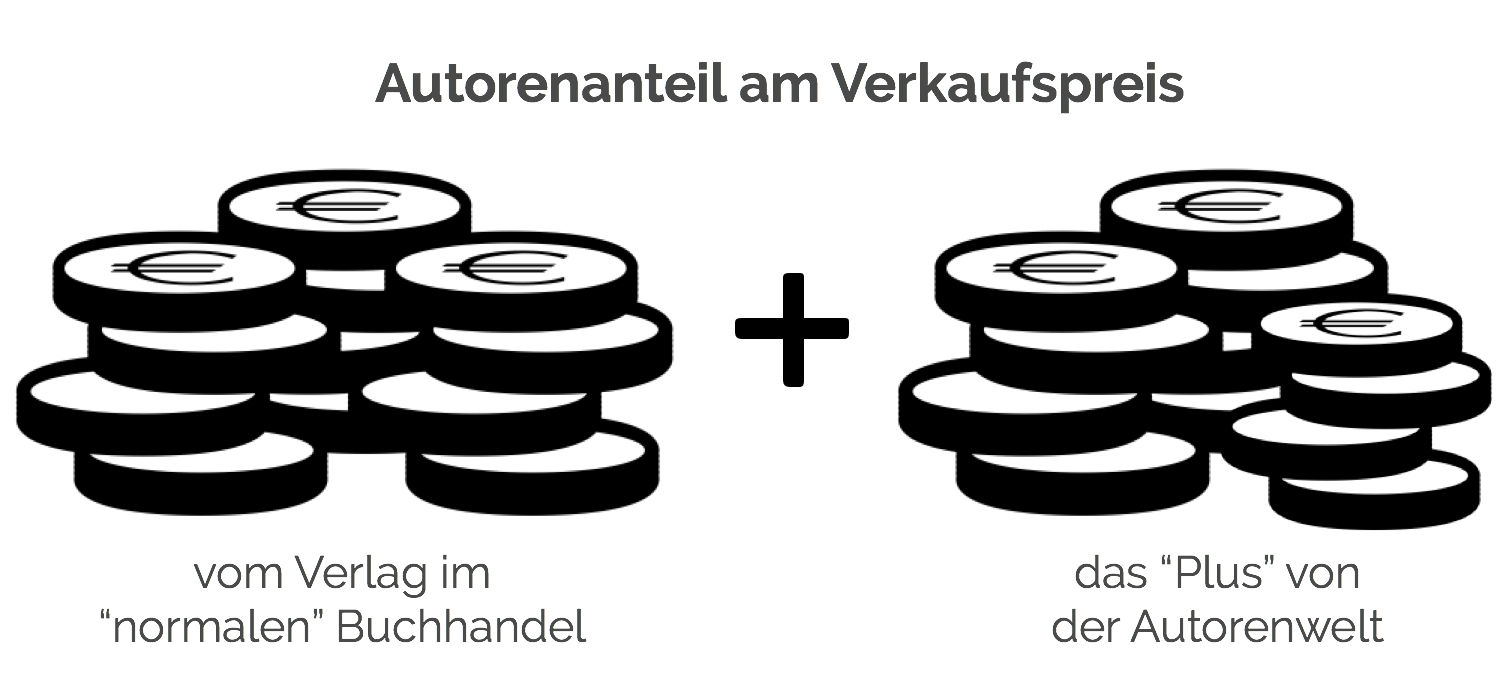
Autorenfreundlich Bücher kaufen?!
Beschreibung
Advances in the physics and chemistry of low-dimensional systems have been really magnificent in the last few decades. Hundreds of quasi-one-dimensional and quasi-two-dimensional systems have been synthesized and studied. The most popular representatives of quasi-one-dimensional materials are polyacethylenes CH [1] and conducting donor-acceptor molecular crystals TIF z TCNQ. Examples of quasi-two-dimensional systems are high temperature su perconductors (HTSC) based on copper oxides LA2CU04, YBa2Cu306+y and organic superconductors based on BEDT -TIP molecules. The properties of such one- and two-dimensional materials are not yet fully understood. On the one hand, the equations of motion of one-dimensional sys tems are rather simple, which facilitates rigorous solutions of model problems. On the other hand, manifestations of various interactions in one-dimensional systems are rather peculiar. This refers, in particular, to electron--electron and electron-phonon interactions. Even within the limit of a weak coupling con stant electron--electron correlations produce an energy gap in the spectrum of one-dimensional metals implying a Mott transition from metal to semiconductor state. In all these cases perturbation theory is inapplicable. Which is one of the main difficulties on the way towards a comprehensive theory of quasi-one-dimensional systems. - This meeting held at the Institute for Theoretical Physics in Kiev May 15-18 1990 was devoted to related problems. The papers selected for this volume are grouped into three sections.
Details
| Verlag | Springer Berlin |
| Ersterscheinung | 26. November 1991 |
| Maße | 23.5 cm x 15.5 cm |
| Gewicht | 283 Gramm |
| Format | Softcover |
| ISBN-13 | 9783540542483 |
| Seiten | 161 |
Schlagwörter
Herstellerinformationen
Bekannt durch