
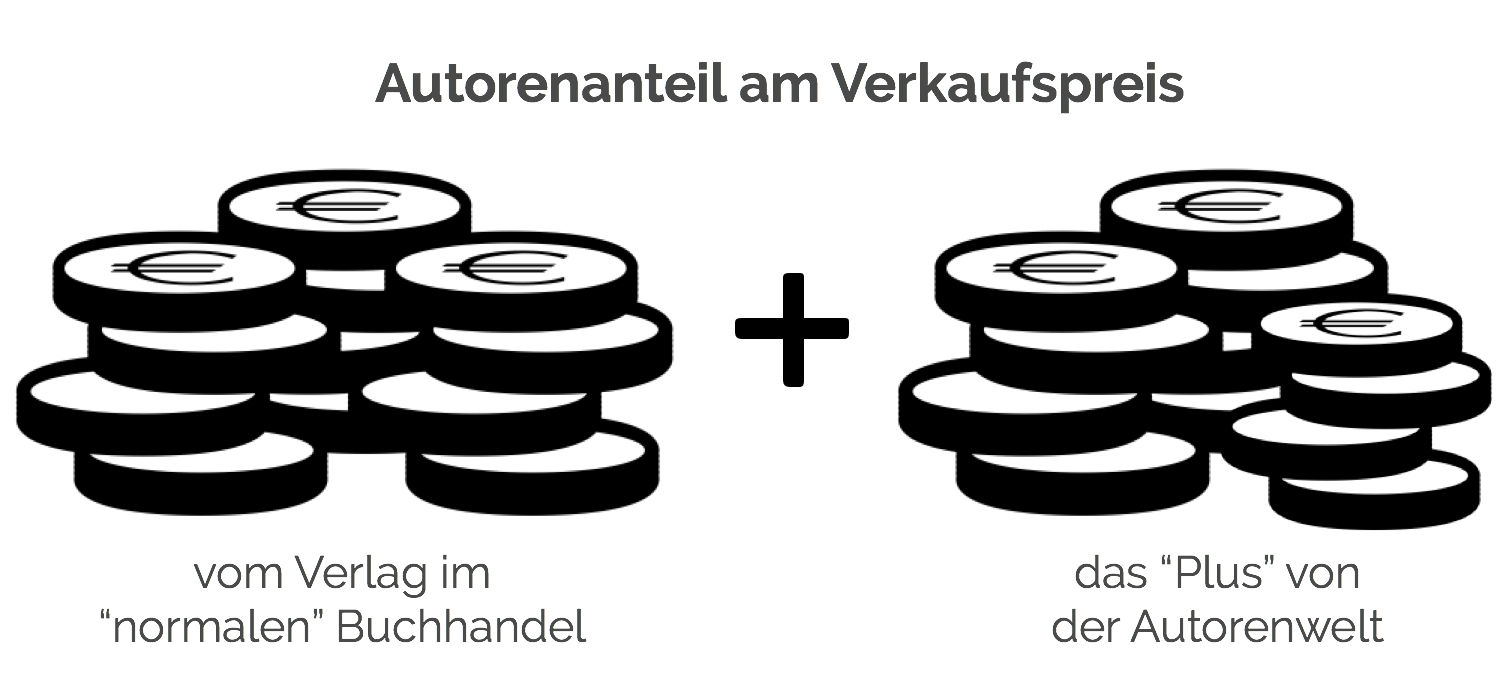
Autorenfreundlich Bücher kaufen?!
Beschreibung
Seminar paper from the year 2003 in the subject English Language and Literature Studies - Linguistics, grade: very good, Carl von Ossietzky University of Oldenburg (Seminar for Anglistics), course: Hauptseminar "Metaphor and Metonymy", language: English, abstract: ¿Most of our fundamental concepts are organized in terms of one or more spatialization metaphors¿: this very elementary conclusion is drawn by George Lakoff and Mark Johnson (1980: 17) after having analysed what they call orientational metaphors. In opposition to the classical point of view, Lakoff, Johnson, and other cognitive linguists believe this group of metaphors, among others, to be deeply embedded in the human conceptualisation system and to provide a means of reasoning about and structuring of entire, mostly abstract, domains in terms of other, more concrete, domains. Based on a limited amount of underlying image schemata, which are projected onto these domains, metaphors are employed in order to be able to understand large parts of the world surrounding us.
Cognitive linguistics asks for the motivation and functional explanation of linguistic expressions. Beyond merely linguistic aspects, the cognitive approach is aiming high, since its targets are, among others, a new theory of categorisation (Lakoff 1987), Imagination (Johnson 1987: 139ff.), and, what would be a fundamental change in Western philosophy, meaning by the approach entitled as cognitive semantics In most of these and other disciplines of cognitive sciences, metaphor is one of the chief means by which these targets are tried to be accomplished. In linguistics, metaphor is an explanation for many expressions which were, on the traditional Objectivist account, viewed as being arbitrary.
The general principle by which cognitive linguists explain thess expressions is as follows: Fundamental spatial and physical experiences yield certain image schemata. These schemata are mapped by means of metaphorical projection onto abstract concepts, which human beings would otherwise not be able to grasp. By metaphorical mapping, these concepts are understood, structured and given meaning. Therefore, metaphor is, on the cognitive account of meaning, far more than just a stylistic device: it is rather a way by which we understand our environment. Furthermore, metaphor is used, as accounted for by the cognitive approach, neither consciously nor intentionally. Contrary to the traditional account in which the speaker or the poet uses metaphorical expressions by intention, these are regarded as merely linguistic reflections of underlying means of understanding which are, for many abstract concepts, the only means available to us by which we can understand these concepts.
Details
| Verlag | GRIN Verlag |
| Ersterscheinung | 28. Juni 2007 |
| Maße | 21 cm x 14.8 cm x 0.3 cm |
| Gewicht | 62 Gramm |
| Format | Softcover |
| ISBN-13 | 9783638647380 |
| Auflage | 2. Auflage |
| Seiten | 32 |
Schlagwörter
Bekannt durch