
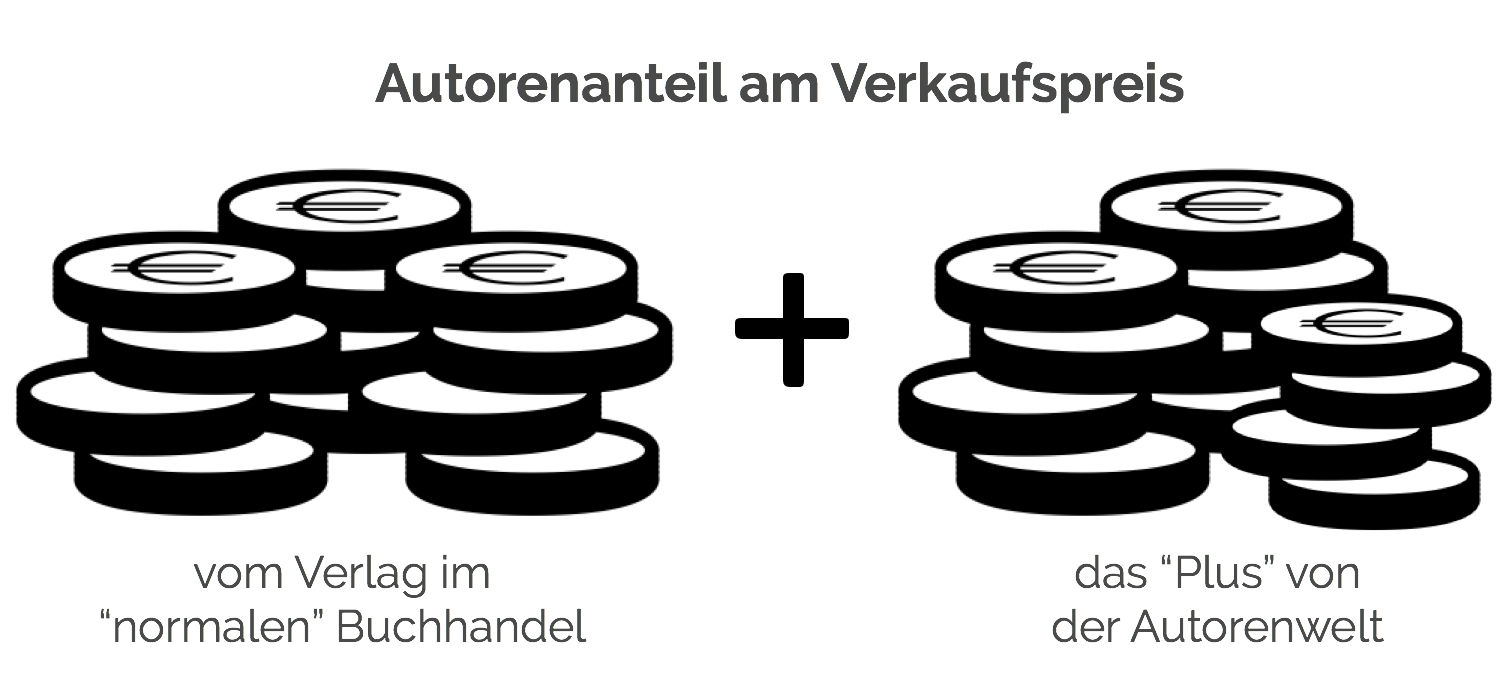
Autorenfreundlich Bücher kaufen?!
Beschreibung
In the present thesis, experimental and numerical investigations were performed to study boundary layer transition on a generic model of a control surface in hypersonic flow at Mach 6. Experiments were carried out in the Hypersonic Ludwieg Tube at TU Braunschweig (HLB) and in the BAM6QT at Purdue University. In order to investigate the influence of the deflection angle, the Reynolds number and the leading edge radius, flow visualizations (Schlieren), pressure and heat transfer measurements were applied. In the BAM6QT at Purdue University, experiments were carried out under noisy and quiet flow conditions to allow investigations on the influence of the free stream conditions.
It was found, that particularly the leading edge bluntness has a great impact on the recirculation region. For the investigated nose radii of rn = 30µm ¿ 330µm, a strong increase of the separation bubble size was observed for increasing nose bluntness.
Numerical investigations were performed based on RANS equations. For the HLB measurements, experimental data in combination with stability analysis revealed the presence of second mode instabilities on the cylinder section in the attached boundary layer. Within the flow separation, a shift in frequency was observed to a frequency range typical for first mode instabilities. Due to the lack of a numerical stability analysis for oblique waves the presence of first modes can not be proven. In the Purdue measurements, second modes could not be observed.
Details
| Verlag | Diplom.de |
| Ersterscheinung | 29. Juni 2022 |
| Maße | 21 cm x 14.8 cm x 0.7 cm |
| Gewicht | 146 Gramm |
| Format | Softcover |
| ISBN-13 | 9783961169603 |
| Auflage | 1. Auflage |
| Seiten | 92 |
Schlagwörter
Bekannt durch